Object
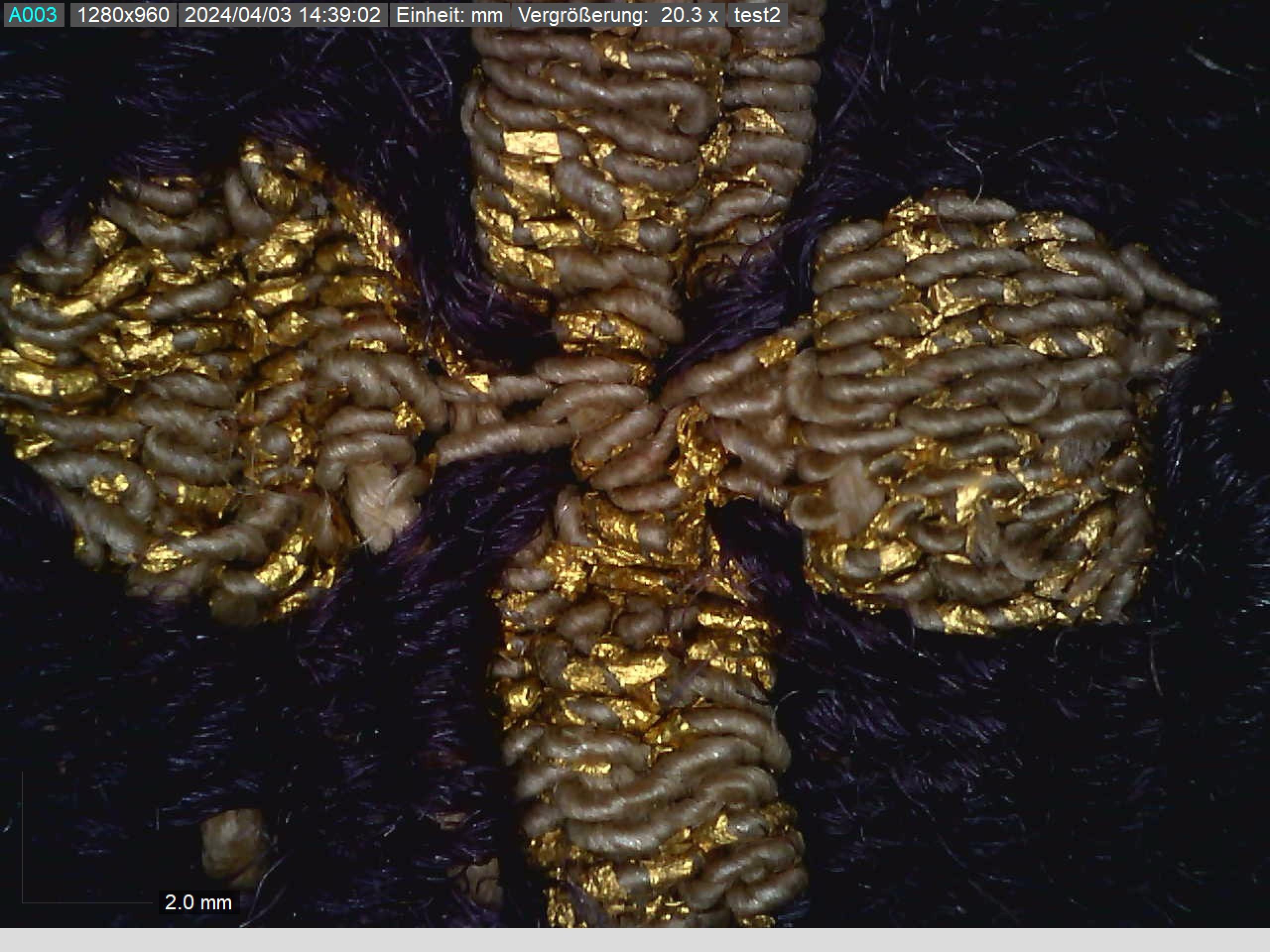
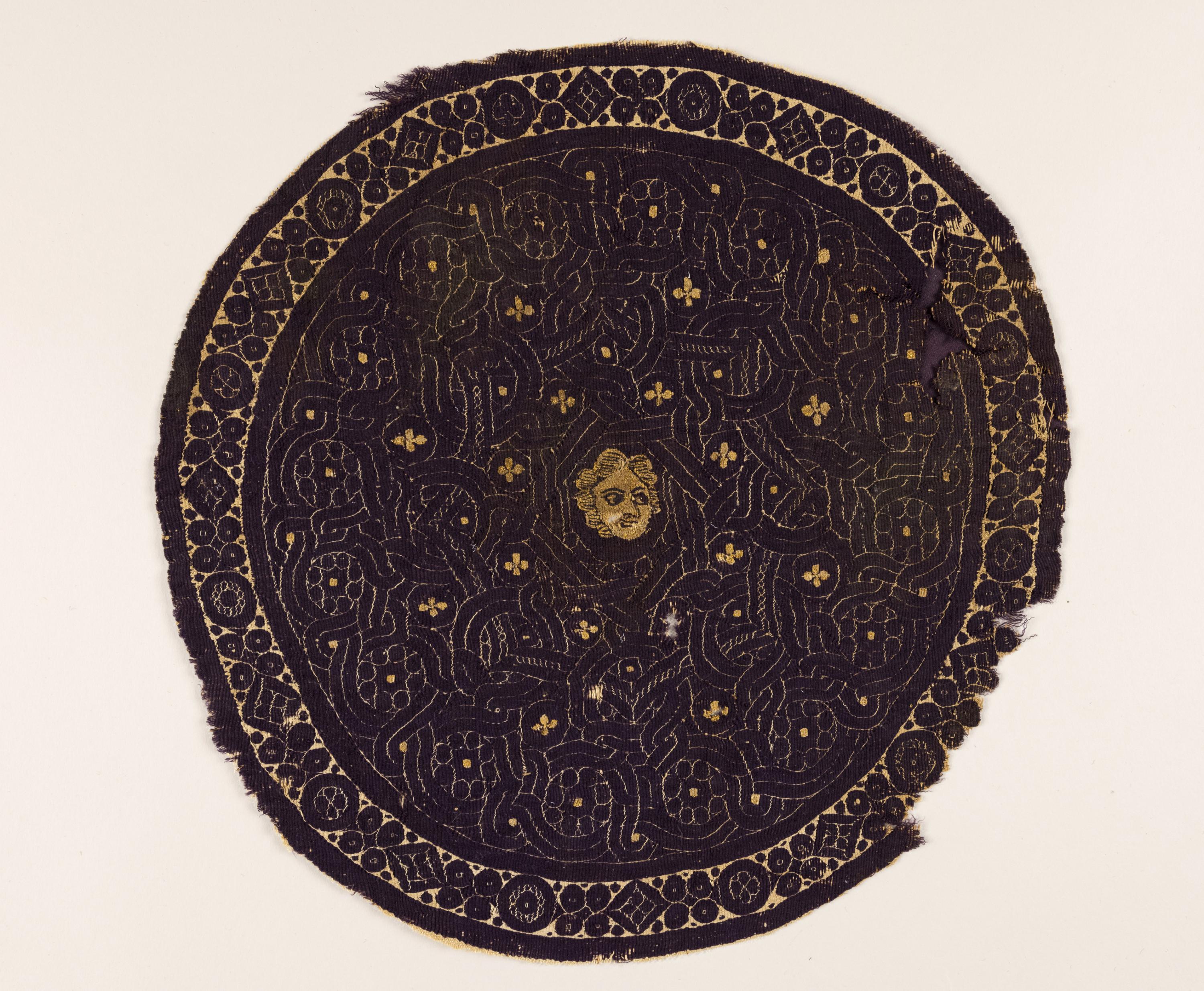
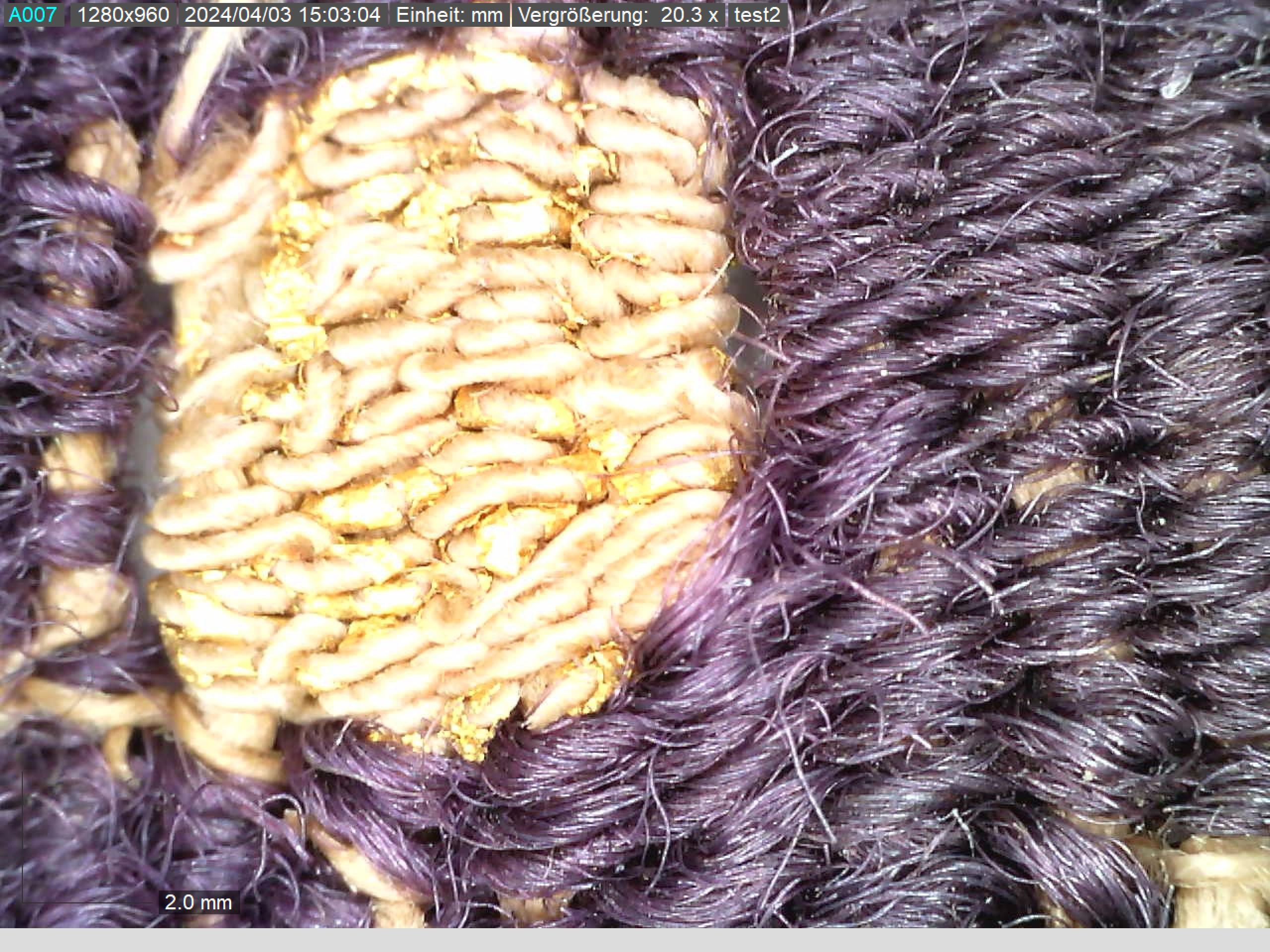
Tapestry weave, warp in linen yarn with some woollen yarn ( coloured with cochinilla and indigo) and gold thread with a silk core.
30,30 x 30,40 cm
, 250 - 400
RKM 433-1930
Purchase 1930
Currently not on display
Description
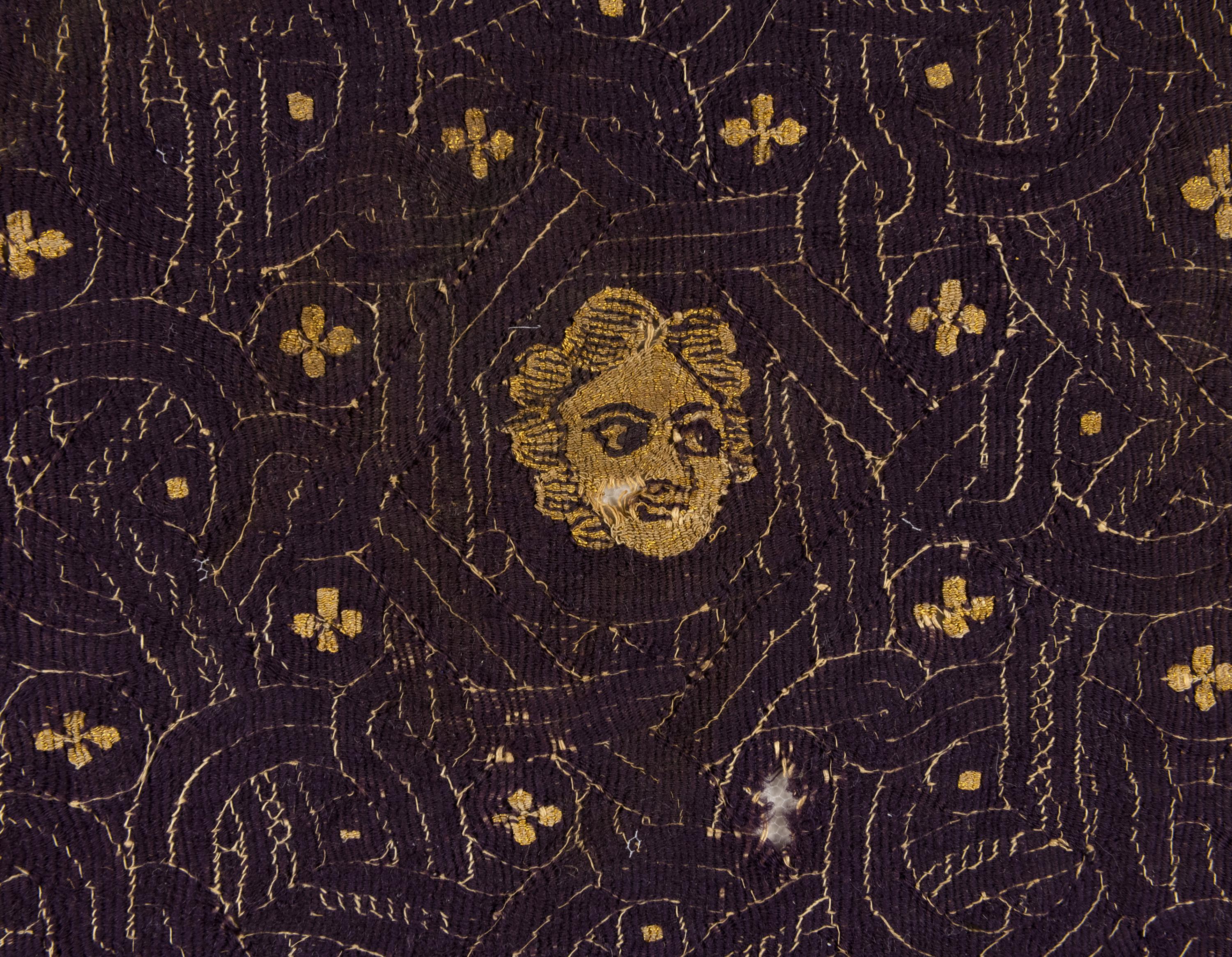
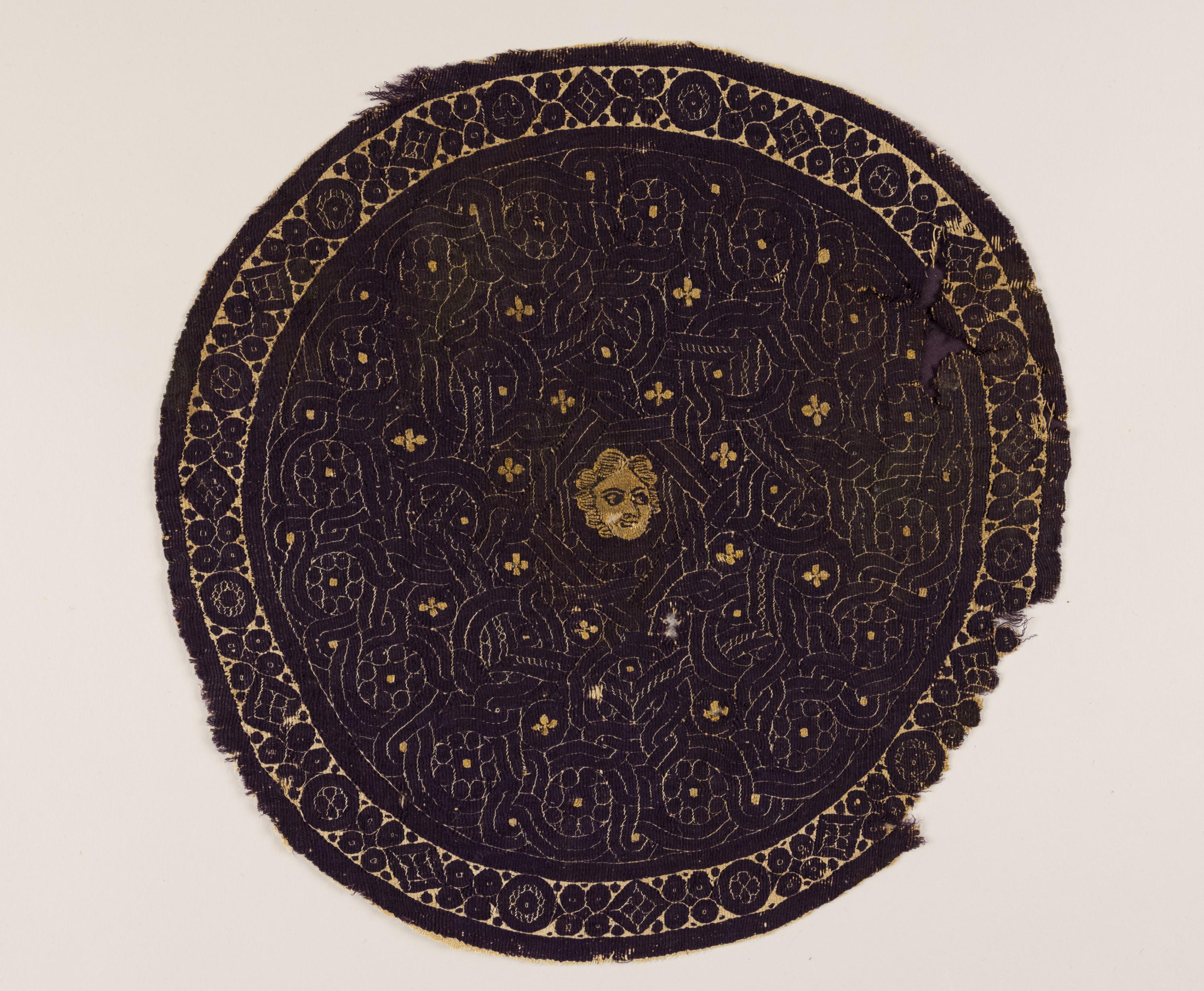
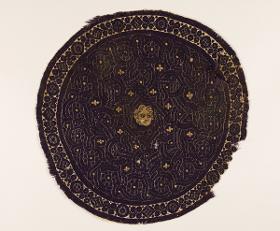
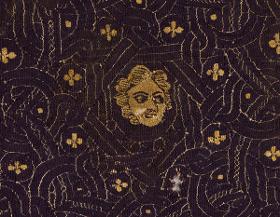
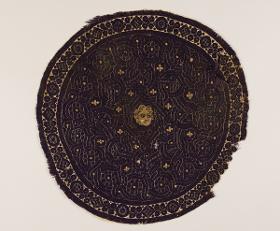
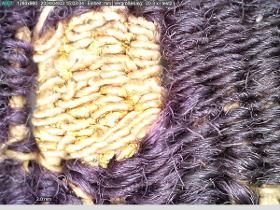
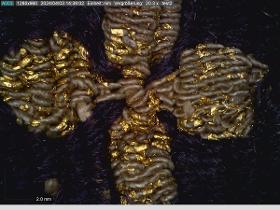
Rare example of a tapestry woven roundel with gold thread decoration. The central head as well as four-petalled flowers and dots in the surrounding field were woven with extremely fine gold threads. The dark violet background has a light, subtle design of interlacing. The dark violet wool threads were not dyed in mollusc purple, but was created by combining a red dye from Armenian cochineal with a blue indigo or woad dye, a skilful imitation of the precious purple of Antiquity.
Technical features reveal that the roundel had originally been woven into an undyed linen fabric. Whether this had been a tunic or a furnishing textile cannot be determined. The roundel would certainly have been combined with other, corresponding tapestry panels or bands as a decorative set.
Literature
Matthias Puhle, Gabriele Köster, Otto the Great and the Roman Empire: Emperorship from Antiquity to the Middle Ages : Brief Guide : Saxony-Anhalt State Exhibition on the Occasion of the 1100th Birthday of Otto the Great, Schnell & Steiner, 2012.
Marianne Erikson, [drawings by Märta Oldfors and Ingela Berntsson ; photographs: Alf Bokgren, Øysten Brochs ; language scrutineer: Skans Victoria Airey], Textiles in Egypt 200-1500 A.D. : in Swedish museum collections, Göteborg, 1997, p. 136-141, ill. p. 142-143
Vivi Sylwan, A late-antique tapestry medallion. A Contribution to the History of Gold Thread Used in Textiles, Röhsska museet, Göteborg 1932, p. 57-71, ill. p. 58, 62
Exhibition History
Otto the Great and the Roman Empire. Emperorship from Antiquity to the Middle Ages., Magdeburg, Kulturhistorisches Museum Magdeburg, 27/08/2012 - 09/12/2012